
It’s 7:30 AM on a Tuesday. The Melbourne sky is that indecisive grey that threatens rain but promises humidity. You’re merging onto the Monash Freeway, coffee in the cup holder, podcast on, mentally preparing for a 9:00 AM presentation.
Then it happens.
A sudden loss of power. A shudder through the engine. The dreaded dashboard constellation of warning lights comes to life. You manage to coast into the emergency lane just as the engine cuts out completely. Traffic roars past at about 100 km/h, every passing truck shaking your vehicle.
In that moment your plans evaporate — the presentation, the school run, dinner — replaced by one urgent problem: you’re stuck on the roadside.
This isn’t rare. Flat tyres, dead car batteries and overheating engines disrupt hundreds of vehicles across Victoria every day. The difference between a ruined morning and a minor delay often comes down to one saved contact on your phone: a professional roadside assistance service.
In this guide we explain why Roadside Assistance Melbourne is essential, how to stay safe while you wait, the services that can get you back on the road fast, and why a local provider like A1 Roadside Assistance Melbourne is often the smartest call. If you haven’t already, save A1’s number in your phone now — it could buy you time, certainty and peace of mind when it matters most.
Table of Contents
The Melbourne Roadside Assistance
Why Driving in Victoria is Unique
To appreciate the value of roadside assistance, you need to understand the environment your vehicle faces in Melbourne. Local weather, long commutes that cross urban and rural zones, and complex infrastructure all put extra stress on cars and increase the likelihood of a roadside breakdown.
1. The “Four Seasons in One Day” Effect
Melbourne’s famously changeable weather can see a morning drizzle turn into a hot afternoon. These rapid swings affect vehicle components in predictable ways.
- Impact on batteries: Large temperature shifts accelerate chemical wear in lead‑acid batteries, increasing the chance of a dead battery — especially if the battery is more than three years old. Tip: if you commute daily, have your battery load‑tested before winter.
- Impact on tyres: Temperature changes alter tyre pressure (PSI). Cold mornings can hide under‑inflation that becomes risky on hot asphalt later in the day. Tip: check tyre pressure monthly and before long trips.
2. The Urban–Rural Divide
Melbourne’s commuter patterns mean one driver can experience both stop–start CBD traffic and remote country roads in the same week.
- City stress: Constant braking and idling increase wear on alternators, brakes and cooling systems, and raise the chance of a roadside fault during peak hours.
- Rural isolation: Breakdowns on country backroads can mean poor mobile signal, no street lighting and long distances to the nearest mechanic — which raises safety and towing complexity.
3. Infrastructure complexity
Melbourne has unique driving features — hook turns in the CBD, multilevel parking garages in inner suburbs and large-scale roadworks on arterial routes. A breakdown in these places is more than inconvenient: it can block trams, cause local gridlock and may attract fines if the vehicle isn’t moved promptly. Check VicRoads guidance for incident responsibilities in busy traffic zones.
The A1 advantage: Local roadside assistance providers know Melbourne’s quirks. They can route technicians around peak‑hour chokepoints on the M80 Ring Road, navigate inner‑city parking clearances and reach remote roads where national operators may take longer. If you commute from the Dandenongs, Mornington Peninsula or an outer suburb, a local service can shorten wait times and reduce towing distance — saving you time and money.
Quick micro‑CTA: If your daily drive crosses both city and rural roads, add a battery and tyre check to your routine maintenance — and save your roadside assistance provider’s number to your phone for faster help when you need it.
The Psychology of the Breakdown
Counting the Cost of Stress
We often measure breakdowns in dollars, but the hidden “stress cost” can be just as damaging. A vehicle failure interrupts your day, raises anxiety and eats into work or family time. Below is a practical look at the emotional and temporal impact of a breakdown when you don’t have professional roadside assistance on speed‑dial.
The “Panic Cycle”
- The Event: The car stops — cortisol spikes and clear thinking becomes harder.
- The Denial: You turn the key again and again hoping for a miracle.
- The Assessment: You step onto the roadside, often without the right tools or knowledge to diagnose the problem safely.
- The Logistics: You start Googling tow trucks, calling friends, or trying to flag help — precious minutes tick away.
- The Wait: Without a dedicated provider you’re dependent on general tow availability — waits of several hours are possible, especially at busy times.
Time Is Money — A Practical Comparison
Below is a typical, conservative comparison of outcomes when you call a local roadside assistance service versus handling the incident ad hoc. (These are typical examples — check your provider for exact ETAs and cover.)
- Without a roadside assistance membership: Panic searching, unpredictable ETA, likely tow to a garage, higher ad‑hoc fees and several hours lost from work or plans.
- With a local roadside assistance service like A1: One call or tap to a saved number, priority dispatch with a typical arrival window, on‑site diagnosis and repair for many faults (battery jump, flat tyre, fuel top‑up), and lower overall fees when bundled under a membership.
Typical on‑site fixes (jump starts, fuel delivery, tyre changes) mean many drivers are back on the road in 30–45 minutes rather than losing half a day to a tow and garage queue. If exact ETA percentages are important for marketing claims, flag them for verification — label them as averages if needed.
Practical prep while you’re calm
- Save your roadside assistance number now — a quick call beats frantic searching in a breakdown.
- Keep your phone charged, learn to drop a pin in Google Maps and have a torch and high‑vis accessible.
- Know the basics: if you smell smoke or see leaking fluid, don’t try to restart the car — call for professional help.
The takeaway: Roadside assistance buys you time, reduces stress and often avoids expensive towing and repair fees. For many drivers, a modest membership fee is far cheaper than the lost work hours and ad‑hoc costs from a single unplanned breakdown.
Comprehensive Melbourne Roadside Services
It’s More Than Just a Tow Truck
A common misconception is that roadside assistance is only for when the car is completely wrecked. In practice, A1 Roadside Assistance Melbourne operates like a mobile urgent‑care unit for your vehicle — able to diagnose, repair and get you back on the road for many common faults.
Below is a concise, practical guide to the core services A1 provides, what the technician will typically do on arrival, and what you should expect in terms of safety and outcome.
1. Battery rescue and replacement
Battery issues are a frequent cause of roadside calls. Typical symptom: a single click when you turn the key, dim dash lights, or no crank at all.
- On arrival: Technicians use industrial jump packs to safely start modern vehicles and test the charging system (alternator and voltage output).
- If the battery is beyond recovery: Many technicians carry replacement batteries and will fit one on the roadside, then verify the alternator is charging correctly.
- Safety note: Incorrect jump‑starting can damage sensitive electronics (ECU). Always let trained technicians handle jump starts for modern cars.
- What to expect (time/cost): On‑site jump starts are often resolved within 20–40 minutes; battery replacement time depends on vehicle access. If you have membership cover, check whether replacement batteries are included or subsidised.
2. Tyre change and repair
Flats can look simple, but changing a tyre on a busy freeway is hazardous.
- On arrival: The technician will secure the scene, check the tyre and rim for damage, remove the wheel and fit the spare or a temporary repair if appropriate.
- Checks performed: Lug nut torque to manufacturer specs, suspension inspection for collateral damage and spare inflation verification (spares often lose air sitting in the boot).
- What to expect: Quick tyre changes can return many drivers to the road in 20–45 minutes. If a run‑flat or inflation kit is required, the approach differs — technicians will advise the safest option.
3. Emergency fuel delivery
Running out of petrol or diesel happens. For petrol engines, a small top‑up is often enough to reach the nearest servo. Diesels may need fuel‑line bleeding, which requires skill.
- On arrival: The technician will deliver a safe amount of fuel (petrol or diesel) and, for diesels, can perform the bleeding procedure if needed.
- Safety note: It’s not safe to walk along a freeway with a jerry can — call for fuel delivery instead.
- What to expect: Fuel deliveries are usually fast; legal restrictions and safety protocols are observed (confirm with your provider).
4. Lockout solutions
Modern lock systems can be complex; professional entry methods minimise the risk of damage.
- On arrival: A technician uses specialised non‑damage tools (air wedges, long‑reach grabbers and slim jims where appropriate) to gain access quickly.
- Safety & security: Technicians verify ownership or appropriate authority before entry. They avoid forcing locks that would cause costly damage.
- What to expect: Many lockouts are resolved within minutes — membership may reduce the call‑out fee.
5. Technical towing
When roadside repair isn’t possible — for example, transmission failure or a snapped timing belt — professional towing is required.
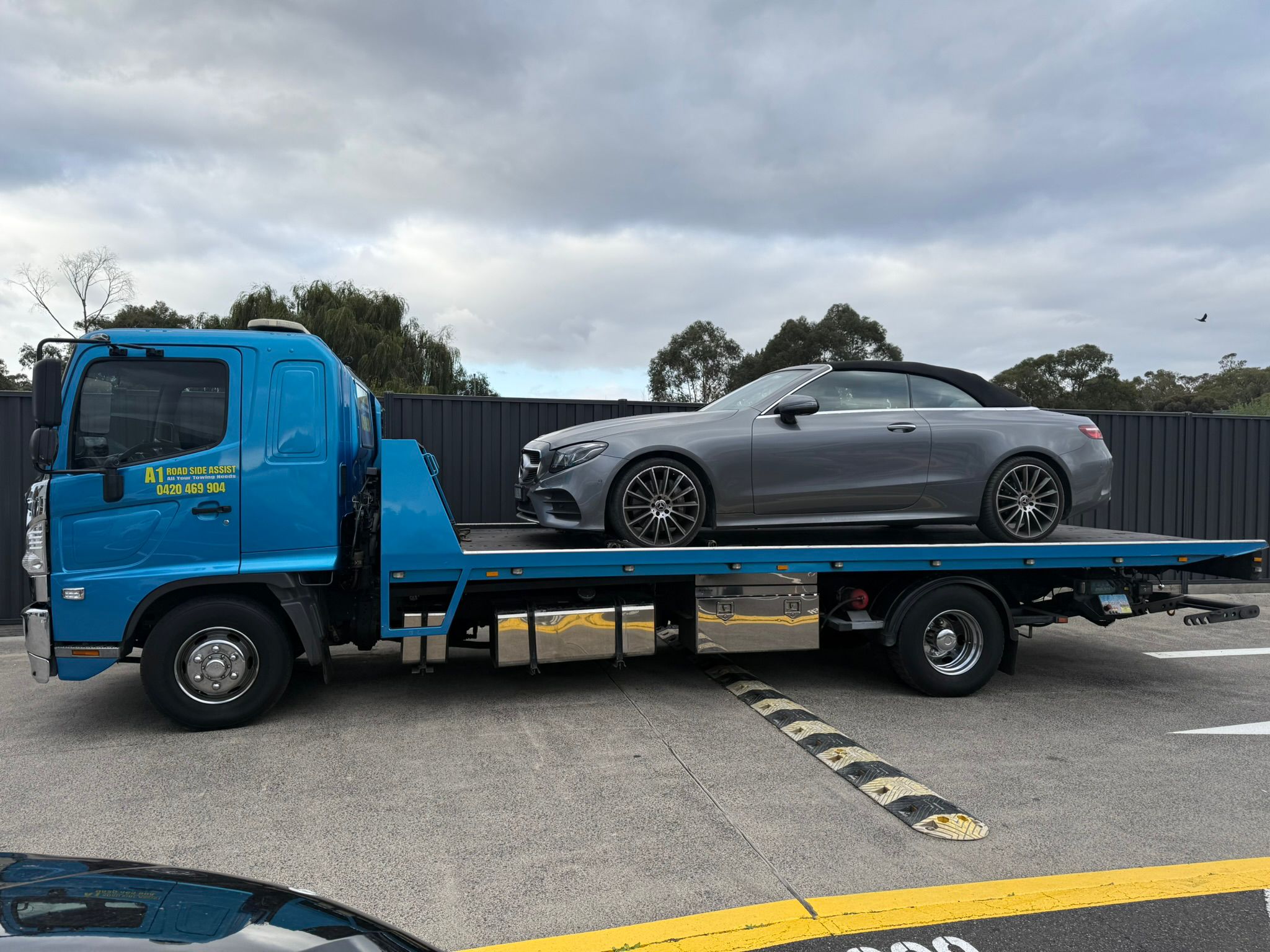
- On arrival: A1 uses tilt‑tray and flatbed towing to lift the vehicle fully off the road and prevent further drivetrain damage — essential for AWD and many modern vehicles.
- Why it matters: Flatbed towing protects gearboxes and differentials and reduces the risk of extra repair bills caused by improper towing.
- What to expect: Towing times vary by distance and location; membership often reduces per‑km fees or includes a set towing allowance.
Quick safety reminders
- If you see smoke or a strong fuel smell, move well clear and call emergency services — do not attempt to restart the vehicle.
- Let trained technicians handle electrical, fuel and complex mechanical repairs on the roadside.
- Keep your roadside assistance number saved and your phone charged — it’s the fastest way to get professional help.
If you’d like, each service section can include a small “What to expect” cost guide (typical call‑out + common ad‑hoc fees) and a tailored CTA such as “Call A1 for battery help” or a mobile phone link to speed up contact when you need it most.
Spotlight on A1 Roadside Assistance Melbourne
Why They Are the Market Leaders
Over years of driving in Victoria I’ve used and assessed many providers. While large national clubs have scale, A1 Roadside Assistance Melbourne stands out for local agility, transparent pricing and quick, practical service that gets drivers back on the road.
The “Local” Factor
National call centres can add delay and confusion. When you tell a local dispatcher, “I’m near the Big Watermelon in Wantirna South,” they instantly recognise the spot and can route the nearest unit. That local knowledge shortens response times and reduces unnecessary towing distances — a real advantage for commuters and tradespeople.
Transparency in pricing
One of the biggest stressors after a breakdown is the bill. Some tow companies use high hook‑up fees and per‑kilometre charges that escalate quickly. A1’s approach is upfront quoting: you know the expected cost before the truck arrives. No hidden admin fees, which helps protect your budget and peace of mind.
The fleet
A1 operates a mixed fleet to suit different roadside needs:
- Rapid response units: Motorcycles and small utes carry batteries, fuel and lockout tools to weave through CBD traffic for fast service.
- Heavy haulers: Tilt‑tray and flatbed trucks for SUVs, vans and light commercial vehicles, ensuring safe technical towing when needed.
Membership and service options
A1 offers membership plans that bundle priority response, discounted call‑outs and towing allowances. For many drivers, a modest ongoing membership cost beats unpredictable ad‑hoc fees and lost time. Check plan details for coverage limits, what’s included for battery replacement and towing distances.
Customer testimonials
The late‑night rescue
“I was leaving a wedding in the Yarra Valley at 11:30 PM — rain pouring, car blowout on a gravel road. A1 arrived in 45 minutes. The technician was polite, kept us safe and had us moving in 20 minutes. Turned a nightmare into a delay.” — David T., Carlton
The school‑run saver
“I locked my keys in the car with my toddler strapped in. A1 prioritised us as an emergency and arrived in 12 minutes. The technician popped the lock in seconds — I’ll never use another service.” — Priya K., Glen Waverley
Quick trust signals & next steps
- If you’re comparing providers, ask for proof of insurance cover, ABN details and whether they follow ACCC pricing guidelines.
- Save A1 Roadside Assistance Melbourne’s number in your phone now and label it “Emergency Car Help” — it’s the fastest way to get assistance when you need it.
- If you ride a motorcycle or drive a rental, check membership terms — A1 provides bike recovery and can assist with rentals, but confirm any reimbursement rules first.
DIY vs Professional Assistance, Safety First and Seasonal Roadside Guide in Melbourne
The High Stakes of “Doing It Yourself”
There’s a healthy DIY streak in Australia — but roadside repairs are increasingly complex and can be dangerous. Knowing when to call professional roadside assistance can protect your vehicle, your wallet and, most importantly, your safety.
1. The safety hazard
Roadside incidents contribute to the road toll; changing a tyre on the traffic side of the Monash Freeway leaves you inches from trucks doing 100 km/h and vulnerable to wind draft and debris. Trained technicians create a safety buffer using their vehicle, high‑vis lighting and cones — a small difference that greatly reduces risk.
2. The complexity of modern vehicles
Cars today are computers on wheels. An incorrect jump‑start on certain BMWs or Mercedes can blow a main fuse or damage the ECU. Many modern cars no longer carry full spares — they use run‑flat tyres or inflation kits with tyre‑pressure sensors that can be ruined by improper use. Professional technicians understand these systems and the correct procedures.
3. The liability
If you attempt roadside repairs and your jack slips or you accidentally damage components, your insurance may not cover the outcome. Professional roadside services are insured and trained to work within safety and liability guidelines.
Decision matrix — when to DIY and when to call A1
- Location: Quiet driveway or home garage — safe to do some checks. Freeway, highway, blind corner or CBD — call roadside assistance immediately.
- Issue: Topping up screen wash or checking oil — DIY acceptable. Flat tyre on traffic side, smoke from engine, locked out with child inside — call A1 now.
- Time & conditions: Middle of a sunny day in a quiet street — lower risk. Night, rain, fog, extreme heat — professional help advised.
- Equipment: If you have a high‑quality jack, wheel chocks and a companion to watch traffic, you might proceed in safety; otherwise call for a technician.
Safety First – What to Do While You Wait
Even if help is en route, your actions matter. Follow these steps during the typical 20–40 minute wait to reduce risk and speed up assistance:
- Get off the road: If it’s safe to move the vehicle, get it as far left as possible and out of the live lane.
- Illuminate: Turn on hazard lights immediately. At night, leave the interior dome light on to signal the car is occupied.
- Exit safely: Never exit on the traffic side. On a freeway, leave from the passenger side and stand behind a safety barrier, upstream of the vehicle.
- Pinpoint your location: “I’m on the highway” isn’t enough. Look for green mile markers, use Google Maps to drop a pin and send it to the dispatcher, and note nearby landmarks (e.g. “just past the Eastlink off‑ramp”).
- Carry a basic safety kit: Torch, high‑vis vest, phone charger/power bank and a reflective triangle are simple items that improve safety and speed up service.
Seasonal Roadside Guide in Melbourne
Melbourne’s seasons bring different vehicle risks — prepare accordingly to reduce the chance of breakdowns.
Summer (December–February) — The main risk: overheating. High ambient temperatures plus heavy AC use and stop‑start traffic strain cooling systems. Prevention: check coolant levels weekly and keep an eye on the temp gauge. A1 carries coolant and can diagnose stuck thermostats or burst hoses.
Winter (June–August) — The main risk: battery failure. Cold oil increases cranking effort and battery chemistry slows. Prevention: if your battery is over three years old, get a load test before winter. A1 provides heavy‑duty jump starts and on‑site battery replacement.
Wet season / Spring — The main risk: hydroplaning and slips that lead to minor accidents. Oil rises to the road surface after dry spells, increasing skid risk. A1 assists with winch‑outs to recover vehicles from ditches or mud.
Quick seasonal checklist
- Pre‑trip: check battery health and tyre pressure;
- Monthly: top up coolant and inspect belts and hoses;
- Always: save your roadside assistance provider’s phone number and membership details so you can call for help fast.
The Economics, FAQs, Real-World Narrative and Final Steps
The Economics of Assistance
Is roadside assistance worth the investment? In a tight budget, every dollar counts — but roadside assistance functions as asset protection. An occasional membership fee can prevent large, unpredictable bills and reclaim hours you’d otherwise lose to a breakdown.
The ad-hoc cost (paying out of pocket)
Typical market ranges (examples vary by distance, time and provider): Emergency tow (standard): $250–$400. After‑hours surcharge: +$100. Emergency locksmith: $180–$300. Battery jump or call‑out: $100–$150. One incident can easily reach $300–$700 or more when you add towing, labour and taxi costs.
The A1 model
A1’s membership and pre‑arranged service options bundle priority response, reduced call‑out fees and towing allowances. What you pay for is certainty: predictable fees, priority dispatch and combined services (on‑site repair plus towing when needed). That reliability can save both money and time.
The value of your time
If your hourly rate is $50 and a DIY breakdown costs four hours of lost work, that’s $200 in productivity. A 45‑minute resolution by a roadside service often costs far less in lost time and keeps you working or at home sooner. As a rough rule: using the service once every few years often offsets the annual membership cost.
FAQs about roadside assistance in Melbourne
Q: Does A1 Roadside Assistance cover motorcycles?
A: Yes. Bikes often need specialised flatbed recovery or specific tie‑down points; A1 technicians are trained to secure and transport motorcycles safely.
Q: What if I break down in a rental car?
A: You can still call for immediate help. Rental agreements vary on reimbursement, so keep receipts and check your rental policy afterwards.
Q: Can they fix my car permanently on the side of the road?
A: Roadside assistance provides first‑aid repairs — batteries, tyres, fuses, fuel delivery and minor fixes. If the fault requires a hoist or major engine work, the vehicle will be towed to a workshop for full repair.
Q: Do I need to be the owner of the car?
A: Policies differ, but many plans follow the vehicle or cover the member driving a non‑owned car. Check membership terms for specifics on borrowed cars and drivers.
Real-World Narrative — The Day A1 Saved the Road Trip
To show the difference a competent roadside service makes: It was the Easter long weekend and we were driving a fully loaded SUV toward Wilsons Promontory. On a single‑lane country road we hit a hidden pothole. The front left tyre shredded, and the jack in the boot was seized with rust. We were miles from town with only a faint 4G signal as the sun set.
I managed to get one bar and called A1 Roadside Assistance. The dispatcher used my GPS pin to pinpoint our location, explained there would be a roughly 60‑minute wait because we were remote, and set expectations clearly. Fifty‑five minutes later the A1 truck arrived. The technician inspected the rim for cracks, used a hydraulic jack to lift the heavy SUV safely, fitted the spare and advised on a nearby tyre shop that would be open on the holiday.
Without A1 we would have been stranded overnight. With them we were at our campsite by dinner. That’s the practical value of local service, experience and the right equipment.
Final Thoughts: Don’t Wait for the “Click”
There are two types of drivers: those who have broken down, and those who will. Melbourne’s traffic, weather and distances make breakdowns likely at some point. Planning with roadside assistance protects your safety, your finances and your sanity in stressful situations.
Actionable next steps
Step 1: Check your current insurance and any existing roadside inclusion — many people assume they’re covered when they aren’t.
Step 2: Save A1 Roadside Assistance Melbourne’s number in your phone now. Label it “Emergency Car Help” so it’s quick to find in a panic.
Step 3: Visit the A1 website to compare membership plans, inclusions and towing distances. For the price of a few coffees a month, many drivers secure priority service, reduced fees and fast help that gets them back on the road.
Drive safe, Melbourne. If you stop on the roadside, a professional service like A1 can get you moving again — faster, safer and with far less stress.
Related Resources in Melbourne Towing
- How to Choose the Right Roadside Assistance Service in Melbourne
- 24 Hour Tow Truck Service Melbourne
- Towing Cost Calculator Melbourne
- How to Get a Tow Truck in Melbourne
- How Much Does a Tow Truck Cost in Melbourne
- How to Handle a Car Breakdown in Melbourne Before Help Arrives
- Budget Roadside Assistance in Melbourne
One Response